Hitting a Deer in Maine: What Your Insurance Actually Covers
Ashley Bullard · September 4, 2026
Hitting a Deer in Maine: What Your Insurance Actually Covers
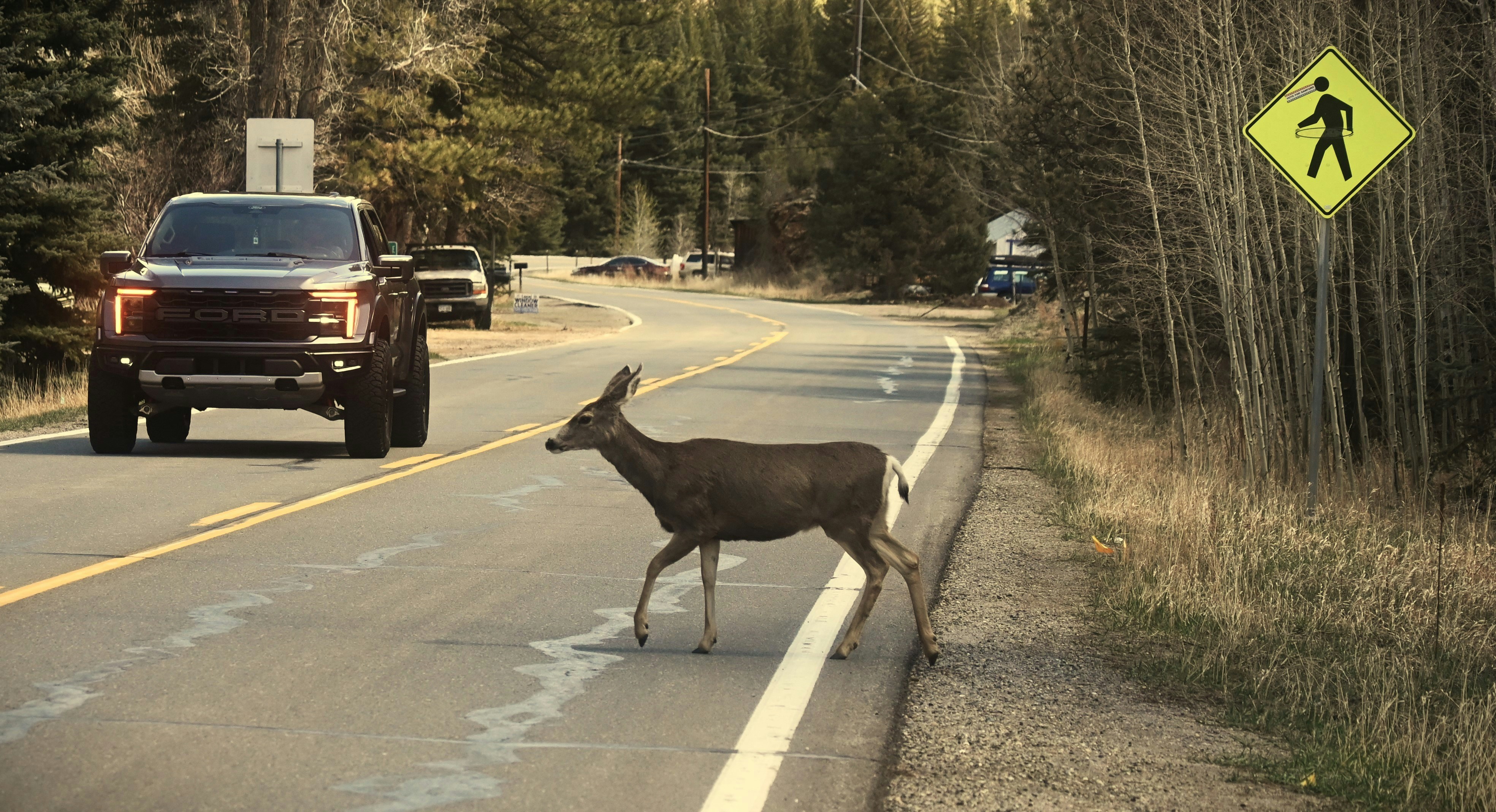
Every fall, the same call comes into our Portland office. Someone is standing on the shoulder of Route 302 or the Gorham bypass at 6:15 in the evening, headlight glass on the pavement, and they want to know one thing: is this covered? Usually, yes. But which part of your policy pays depends on details most drivers have never had a reason to think about — and the difference can be a few hundred dollars and whether your rate moves at renewal.
Fall is deer season on Maine roads
This isn't a hunch. The Maine Department of Transportation reports that collisions with deer climb through the autumn and peak in November, when breeding season has the animals moving. A few numbers worth knowing:
- Maine recorded 6,046 deer-vehicle collisions in 2024.
- MaineDOT estimates the average deer collision causes about $34,140 in economic loss.
- Cumberland and Penobscot counties consistently rank at or near the top of the state for deer-related crashes. If you live in Greater Portland, you are in the highest-exposure part of Maine, not the lowest.
The risk also concentrates in a narrow window of the day. Deer are most active between dusk and dawn, and when daylight saving time ends on November 1 this year, the evening commute moves straight into the dark. The peak month and the peak hour arrive in the same week.
Comprehensive, not collision
Here's the part that surprises people. If you hit a deer, that is almost always a comprehensive claim, not a collision claim. Comprehensive covers damage that happens to your vehicle from something other than a crash with another car — fire, theft, hail, a tree limb, and animal strikes. Two things follow from that:
- You need comprehensive coverage to be covered at all. Maine requires liability insurance, which pays for damage you cause to other people. It does not pay to fix your own car. If you carry liability only — common on older vehicles and paid-off cars — a deer strike comes out of your pocket.
- Comprehensive carries its own deductible, often a lower one than your collision deductible. Check your declarations page. Many Maine drivers carry a $500 comprehensive deductible against a $1,000 collision deductible, which matters directly to what you'd pay on a $3,500 bumper and headlight assembly.
The swerve changes everything
Now the wrinkle. If you swerve to avoid the deer and hit a guardrail, a tree, or another vehicle, you never actually struck the animal — and that is a collision claim. Same night, same deer, same road. Different deductible, and a claim that is generally treated as at-fault, which is a different conversation at renewal. Safety guidance from MaineDOT and every driving instructor in the state is consistent on this: brake hard, stay in your lane, don't swerve. It's better advice for your safety and, as it happens, better for your claim.
Will my rate go up?
Comprehensive claims are typically classified as not-at-fault, and a single deer strike generally does not carry the surcharge that an at-fault collision does. Multiple claims in a short span can still affect your standing at renewal, so it isn't a free pass — but one deer in November is not the rate event people fear. If the repair estimate is close to your deductible, the math may favor paying out of pocket anyway. Call your agent and talk it through before you file. That's a five-minute conversation, and it's free.
What to do at the scene
- Get off the road safely. Hazards on, pull as far onto the shoulder as you can.
- Call it in. Report the crash to the local police or the Maine State Police. Maine law requires reporting a crash involving property damage of $1,000 or more, and a deer strike clears that threshold easily. A report also creates the documentation your claim will rest on.
- Do not approach an injured deer. An animal in distress is dangerous and can injure you badly. Let the responding officer or game warden handle it.
- Photograph everything. the vehicle, the road, the location, and the deer if it's still present. Hair or blood on the vehicle is useful evidence of an animal strike.
- Check whether the car is safe to drive. A pushed-in fender riding on a tire, a leaking radiator, or a compromised headlight at night means call for a tow.
- Start the claim. The sooner it's opened, the sooner the estimate and the rental car happen.
What about moose?
Different animal, different season, much higher stakes.
Moose collisions in Maine peak in May and June, not the fall. But they are far more severe when they happen: MaineDOT puts the average economic loss at roughly $179,221 per moose crash, more than five times the figure for deer, and a person in the vehicle is injured in about one in six of them.
A moose stands tall enough that the body comes through the windshield rather than over the hood. Coverage works the same way it does for deer — comprehensive — but this is the case where your medical coverage and your health insurance matter as much as your auto physical damage limits.
Two things to check before November
- Do you actually carry comprehensive? If you dropped it on an older vehicle to save premium, run the numbers against a $34,000 average loss. On a vehicle worth $6,000, dropping comprehensive may still be the right call — but it should be a decision, not a surprise.
- What's your comprehensive deductible? If you haven't looked at your declarations page since you bought the policy, this is the month to look.
Northern Shore Insurance is the only GEICO Exclusive Agency in Maine, based at 91 Auburn Street in Portland and licensed in Maine, New Hampshire, and Vermont. If you want someone to look at your declarations page with you before deer season, call us at 207-387-6838 or email maine@geico.com.